
As part of the Jobs for Nature Programme, the Ministry for the Environment funded 15 regional councils to explore using nature-based solutions for managing flood risk. Greater Wellington focused on the Waipoua River, which poses a flooding risk to Masterton.
Why nature-based solutions?
These approaches work with natural processes to slow water, store it, and reconnect rivers with their floodplains. They also have the potential to deliver a suite of ecological, cultural, and social benefits.
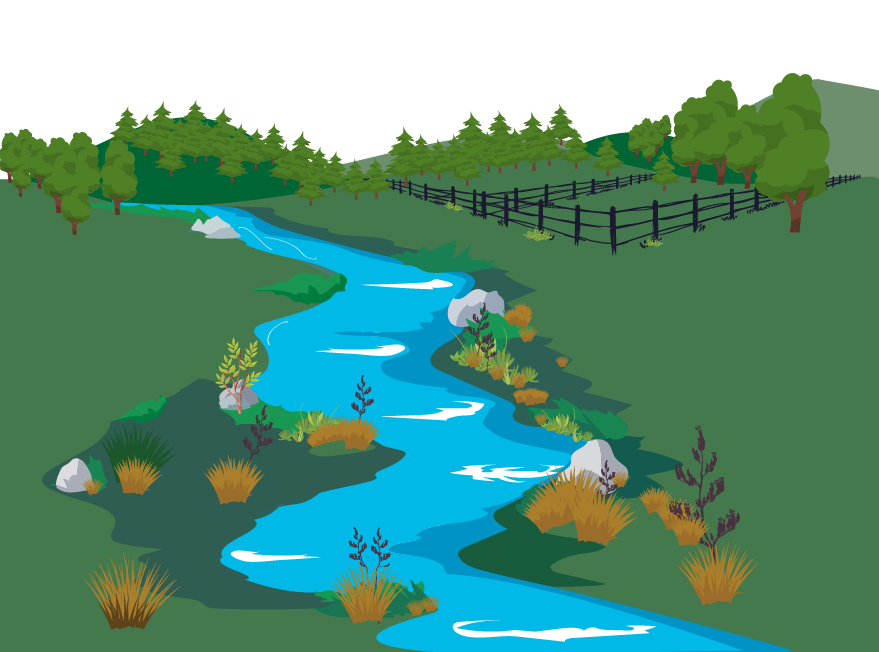
1. Land retirement and native afforestation
- What: Retire hill-country farmland and plant native forest.
- Why: Slow overland flows and increase infiltration.
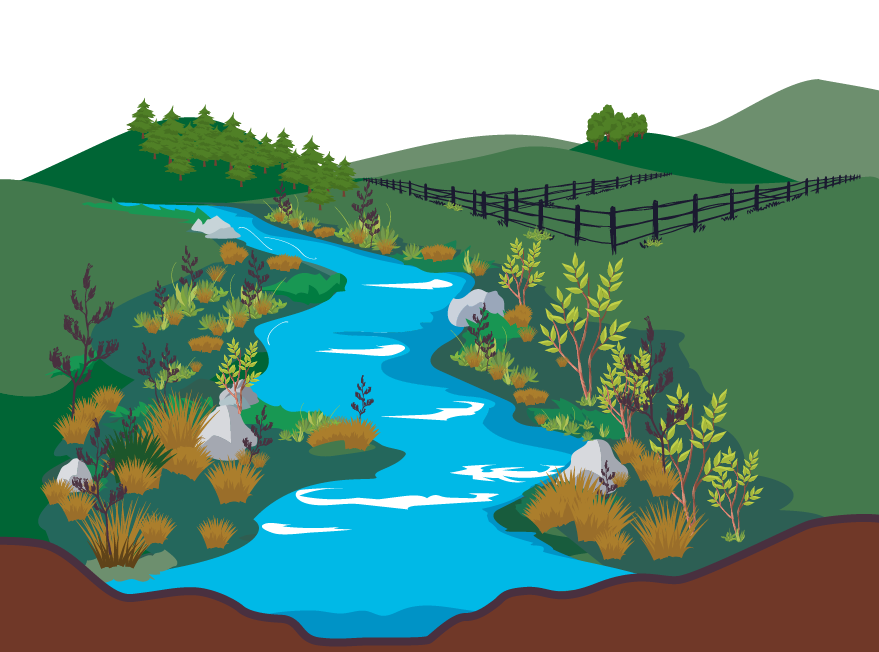
2. Floodplain re-engagement
- What: Lower floodplain areas adjacent to the river and plant natives.
- Why: Let floodwaters spill naturally and reconnect old channels.
3. Small-scale retention storage
- What: Build storage like ponds, wetlands, or leaky dams on flow paths.
- Why: Capture runoff to reduce or delay flood peaks.

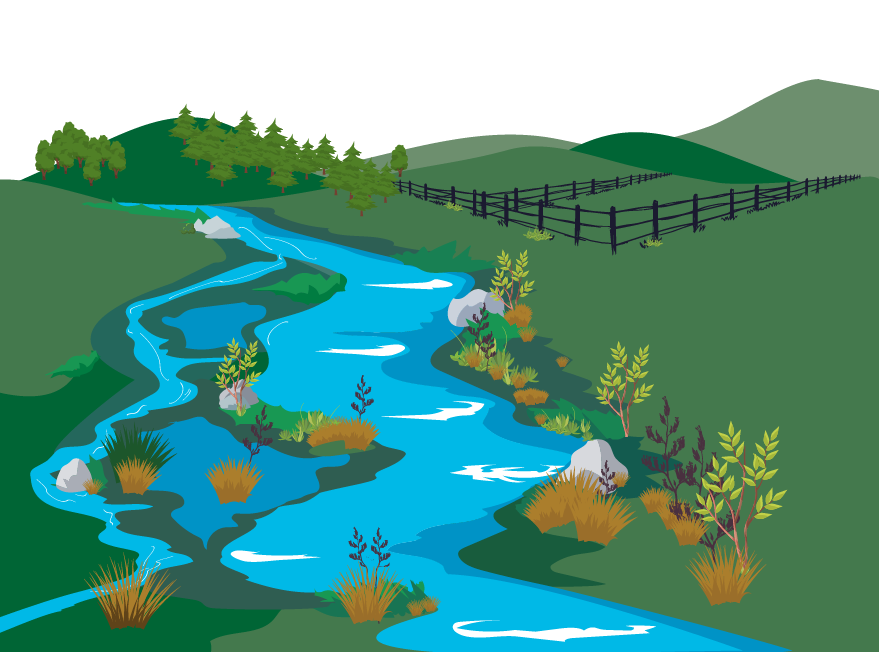
4. Channel realignment (“Room for the River”)
- What: Give the river space to erode, meander, and widen.
- Why: Restore natural processes and reduce stream power.
While a range of different sized flood events were looked at in this feasibility study, the focus was a large 1% annual exceedance probability (AEP) event (a flood that has a 1% chance of happening in any given year).
What we did
Technical experts came up with aspirational but plausible scenarios of what each of the four study nature-based solutions could look like in the Waipoua catchment.
These scenarios were then used to inform a range of technical assessments, including flood reduction, geomorphology, changes to groundwater and river baseflows as well as ecological, cultural and social benefits. High level costs and land area requirements were also estimated.
The results of these assessments were used to inform the feasibility of using nature-based solutions to manage flood risk.
What we found
- Flood reduction: Limited for large floods (1% AEP); best case was <4% peak flow reduction. Some nature-based solutions could be more effective for smaller floods (<10% reduction) but others could make the flooding worse.
- Cost: All nature-based solutions require significant land use change and investment for a significant reduction in flood peaks. This means high costs of $9M to $201M per 1% reduction in peak flow.
- Wider benefits: All nature-based solutions provided a suite of ecological, cultural, and social gains. This could include benefits to biodiversity, better water quality, climate regulation, support for Mātauranga Māori and landscape connectivity.
- Risks: Uncertain performance, long timeframes to become effective, and land-use conflicts.
In conclusion
Nature-based solutions cannot replace structural flood protection measures in Masterton but can play a complementary role. A hybrid approach combining multiple nature-based solutions could achieve a greater reduction in flood risk, as well as a broader range of other benefits.
To read the full report, head here:
Feasibility study of nature-based solutions for addressing flood risk to Masterton
This report presents the findings of a feasibility assessment to consider nature based solutions for flood risk management in the Waipoua Catchment. The feasibility assessment found that nature-based solutions (NBS)… Read more here
date_range Published 01 Jul 2025
Download now (PDF 74 MB) get_appGet in touch
- Phone:
- 0800 496 734
- Email:
- info@gw.govt.nz